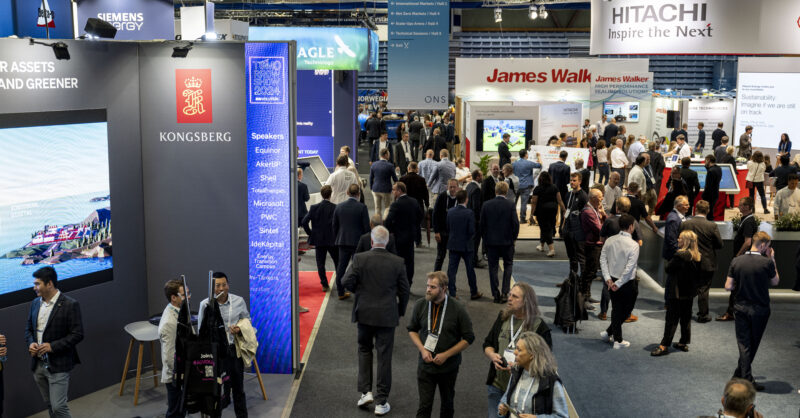


4 September 2026, London (The Energy Circle by IN-VR) — Libya used the world's largest offshore energy gathering to make a coordinated pitch. At ONS 2026 in Stavanger, Norway (24 to 27 August), Libya's Minister of Oil and Gas, Khalifa Abdel-Sadig, opened government-to-government talks with Norway's Minister of Energy, Terje Aasland, and, in the same week, sat down with the leadership of Shell, TotalEnergies and ConocoPhillips. Taken together, the meetings sketch out a clear strategy: bring in Norwegian expertise on how to manage an offshore resource base, and push the majors already in Libya from studies and extensions into capital deployment.
Stavanger as a Model, Not Just a Venue
The Norway meeting is the newest thread. According to the Ministry of Oil and Gas, the two ministers discussed establishing a direct cooperation pathway between their ministries and encouraging Norwegian companies to invest and operate in Libya. The agenda was built around what Norway does well: petroleum resource management, technology, offshore field development, and capacity building. Renewable energy, knowledge exchange and the training of Libyan talent were also on the table.
The Minister framed the talks as part of directives from Tripoli Prime Minister Abdel Hamid Aldabaiba to expand international partnerships in the energy sector, attract investment and advanced technology, and work with countries that hold leading expertise in the field.
For Libya, the logic is obvious. Norway built one of the most disciplined offshore regimes in the world from a standing start, and its supply chain, from subsea engineering to marine services, is concentrated in the same city where the meeting took place. For a country with a largely unexplored offshore and a stated ambition to grow gas output, a Norwegian channel is worth more than any single contract.
Waha to 2050: Now Comes the Spending
The company meetings are where the near-term money sits.
Shell. The Minister met Wael Sawan, Shell's CEO, to review the company's progress in Libya and the steps needed to move from technical studies to investment and development. Shell's role in developing the Libyan gas sector was central, including its expertise in gas development, marketing and flaring reduction. The Minister's stated aim was to build on existing cooperation to support Shell's broader return to the Libyan market and turn it into practical projects.
TotalEnergies. With Patrick Pouyanné, Chairman and CEO of TotalEnergies, the discussion covered the company's investment programme in the Waha concessions following their extension to 2050, plans to raise production and develop infrastructure, and the progress and next phase of the Mabruk field. The two sides also discussed expanding gas investment, reducing flaring and converting gas into economic value, alongside renewable energy projects, with the Minister pressing for new investment to be accelerated.
ConocoPhillips. The Minister met Kirk Johnson, Executive Vice President of Global Operations and Technical Functions, and Steinar Fagge, President for Europe, the Middle East and Africa. The agenda was ConocoPhillips' investment plans for the next phase, development programmes for the Waha concessions and production increases, building on the 2026 agreement that extended those concessions to 2050. Modern technology and the development of national expertise were also discussed. Faisal Miloud, Chairman of Zueitina Oil Company, and Salem Amdeqish, Libya's Ambassador to Denmark and Norway, attended.
The common thread across all three is unmistakable: concession extensions have been secured, and Libya now wants the investment those extensions were meant to unlock. The Minister's language in each meeting, "expedite implementation", "move from studies to investment", "accelerate new investments", reads as a government that considers the framework settled and the clock running.
Libya's Pitch to the Room
Between the bilateral meetings, the Minister took part in the ONS panel "Will Energy Continue to Shape the Global Balance of Power?" His message to the room was that energy security is now a component of national security, and that Libya's location, resources and proximity to European markets make it a natural energy partner in the Mediterranean. He argued the transition is not a choice between oil, gas and renewables but a matter of building a more diversified and efficient mix, with technology, artificial intelligence and human capital used to extract more value from existing resources.
That framing matters for how Libya wants to be read in Europe. It is not asking to be treated as a swing supplier of last resort. It is presenting itself as a structural partner with pipeline access to Italy, low production costs, and a government actively courting the companies that can grow output.
Three Signals Worth Reading
Three things stand out. First, the sequencing. Waha's extension to 2050 was the enabling step; the ONS meetings were the follow-through, and the pressure is now on the operators to commit capital. Second, gas is the priority. Flaring reduction, gas monetisation and gas-to-value appeared in nearly every meeting, consistent with the National Oil Corporation's push to lift gas output and export surplus to Europe. Third, Libya is building a services and capability agenda alongside the upstream one. Training, technology transfer and national expertise were raised with Norway and with each of the majors, which points to demand for onshore capacity: fabrication, logistics, marine support and skilled crews.
The usual caveats hold. Libya's political settlement remains unfinished, and the sector has seen periodic disruption tied to disputes over institutional control. Announcements from the sidelines of a conference are statements of intent, not final investment decisions. But the pattern of the week is telling. A government minister does not secure back-to-back meetings with the CEOs of Shell and TotalEnergies and senior ConocoPhillips leadership, plus a bilateral with the host country's energy minister, unless the counterparties believe there is something to negotiate.
From Conversations to Contracts
ONS 2026 was Libya's most concentrated outreach to the offshore industry in years. Norway offers a model and a supply chain; Shell, TotalEnergies and ConocoPhillips offer the capital and the operating capability. The task ahead is converting a week of aligned conversations into contracts, rigs and gas volumes. If that conversion happens, the Mediterranean's most underused hydrocarbon partner will have moved a decisive step closer to the role it has been claiming for itself.