



RELATED EVENTS
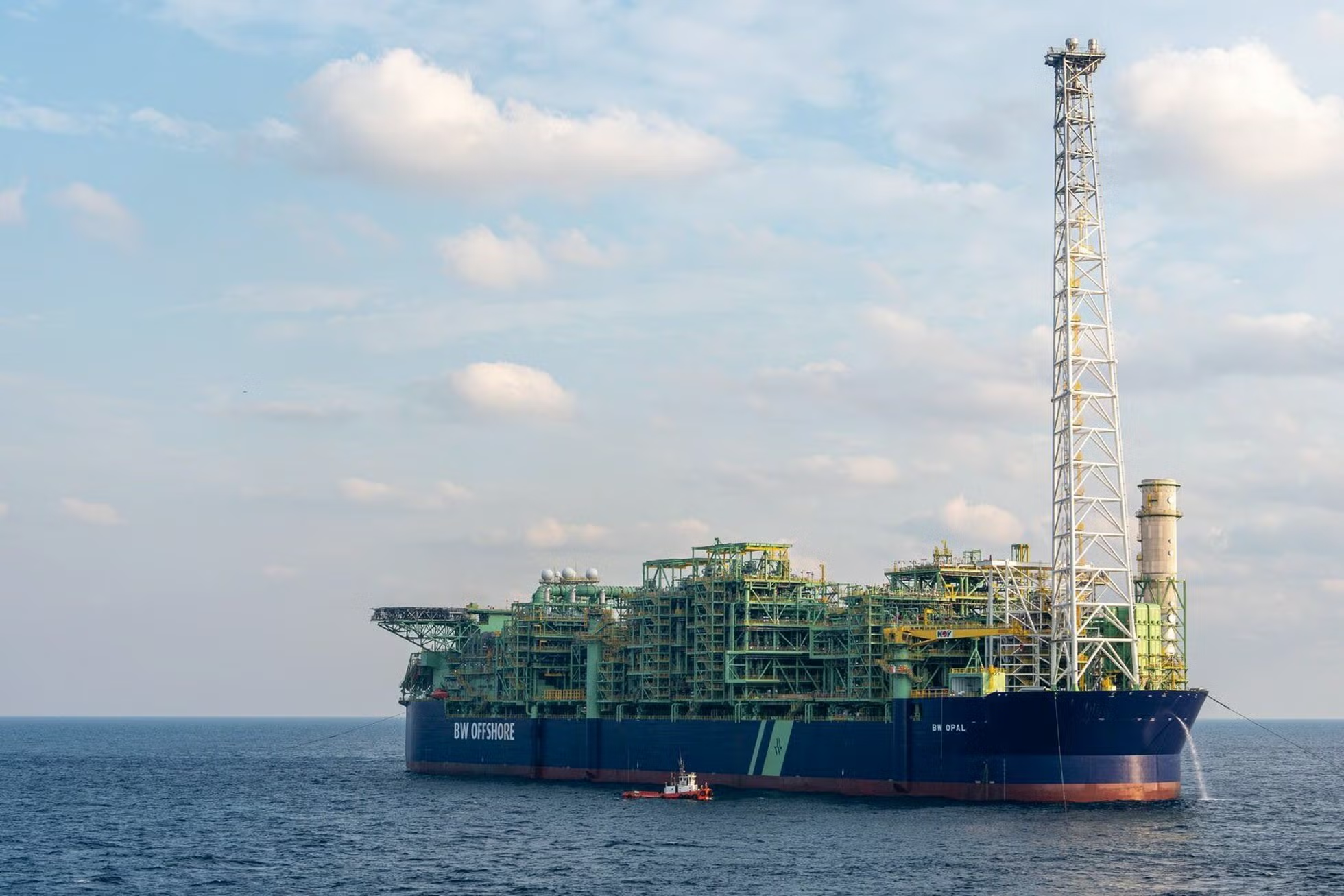
1 June 2026, London (The Energy Circle by IN-VR)-- Santos Ltd is pushing ahead with its proposed Carbon Capture and Storage (CCS) project at the Bayu-Undan field in the Timor Sea. In May 2025, Santos representative José Lobato Gonçalves met with President José Ramos-Horta in Dili, the second such meeting since CEO Kevin Gallagher first presented the project at the Presidential Palace in 2022, signaling continued commitment despite a complex approval road ahead.
What Is the Bayu-Undan CCS Project?
Once Bayu-Undan's gas production concludes, Santos proposes repurposing the depleted reservoir as a long-term storage site for carbon dioxide (CO2). The project is primarily driven by the need to handle large volumes of CO2 being emitted from Santos' Barossa gas field, as well as potentially other high CO2 fields in the area. Santos has put forward a project cost estimate of approximately US$1.6 billion, with the former head of Timor-Leste's National Petroleum and Minerals Authority (ANPM) projecting it could generate up to US$7 billion in economic value for the country. The project's stated ambition is to capture up to 10 million metric tons of CO2 per year.
The Bayu-Undan CCS project is one pillar of Santos' three-hub CCS strategy. The company's Moomba CCS project in South Australia, the most advanced of the three, was reported to be 70% complete and on track to store up to 1.7 million tonnes of CO2 annually, giving Santos operational precedent to point to as it seeks support for the Timor Sea initiative. Santos operates Bayu-Undan with a 43.4% interest. Other partners in the joint venture include SK E&S (25%), INPEX (11.4%), Eni (11%), and Tokyo Timor Sea Resources (9.2%).
The Diplomatic and Commercial Track
Timor-Leste has engaged this proposal with the seriousness it deserves. In 2022, Santos CEO Kevin Gallagher presented the CCS concept to President Ramos-Horta at the Presidential Palace, marking the first formal government-level discussion of the project. The following year, Santos and its Bayu-Undan joint venture partners signed a Memorandum of Understanding with TIMOR GAP, Timor-Leste's national oil company, reflecting the country's willingness to explore partnerships that serve its national interest.
In 2024, Timor-Leste's Ministry of Petroleum and Mineral Resources signed a one-year cooperation agreement with the International Finance Corporation (IFC), the World Bank Group's private sector arm. The agreement positions Timor-Leste to build a robust legal and commercial framework for CCS, drawing on IFC's global experience in similar projects. According to IFC Country Manager Euan Marshall, the collaboration is intended to support the ministry in exploring the conditions necessary to establish an innovative carbon capture and storage site at Bayu-Undan.
At the May 2025 meeting, President Horta demonstrated the leadership and diligence that has come to define Timor-Leste's approach to major investment decisions. The Presidency made clear that any such undertaking must deliver real benefits to the nation and meet the highest environmental standards, a position that reflects both ambition and responsibility.
What Still Needs to Happen
The project is progressing through the necessary stages of development. Timor-Leste is actively building the legal and regulatory framework required for CCS, with IFC technical assistance already engaged to support this work. Commercial and fiscal terms between Santos, its JV partners, and the Timorese government are under discussion, as would be expected at this stage of a project of this scale and significance.
As with any major energy project, questions have been raised by civil society. Local organization La'o Hamutuk has called for rigorous environmental review and a thorough assessment of the project's climate credentials. In June 2021, the organization published a formal objection to the plan and in February 2022 submitted a request to the Northern Territory Environmental Protection Authority in Australia to conduct a holistic analysis of Santos' CCS proposal. President Horta's insistence on the highest environmental standards is a direct response to this expectation, ensuring Timor-Leste's interests remain protected throughout the process.
The Broader Context
For Timor-Leste, the Bayu-Undan CCS project represents an opportunity to extend the economic life of one of its most significant energy assets while contributing to regional climate goals. The country has consistently approached the proposal with a clear-eyed commitment to ensuring any agreement delivers tangible value to its people. Santos, for its part, has demonstrated through repeated high-level engagement that it views Timor-Leste as a credible and essential partner in making this project a reality.
Outlook
The milestones secured to date, the TIMOR GAP MOU, the IFC cooperation agreement, and two presidential-level meetings, reflect a relationship built on mutual respect and shared ambition. The project requires alignment between a sovereign government, a national oil company, a multinational operator, and multiple JV partners, and Timor-Leste has shown it has both the institutional capacity and the political will to see that process through.
Whether Bayu-Undan becomes a landmark in the regional CCS market will depend on how quickly the legal, commercial, and environmental foundations can be finalized. On current trajectory, Timor-Leste is building those foundations with purpose.
Sources: TATOLI Agência Noticiosa de Timor-Leste; Upstream Online

.png)


