



RELATED EVENTS
5 March 2026, London (TheEnergyCircle by IN-VR)--TIMOR GAP and Eni have formalised a 12.5% state participation interest in offshore Block P (PSC-TL-SO-22-23) on Timor-Leste's southern coast, witnessed by Minister Francisco da Costa Monteiro. With an active seismic and drilling programme underway, the agreement marks a strategic step in Timor-Leste's push to maximise national ownership over its offshore resources.
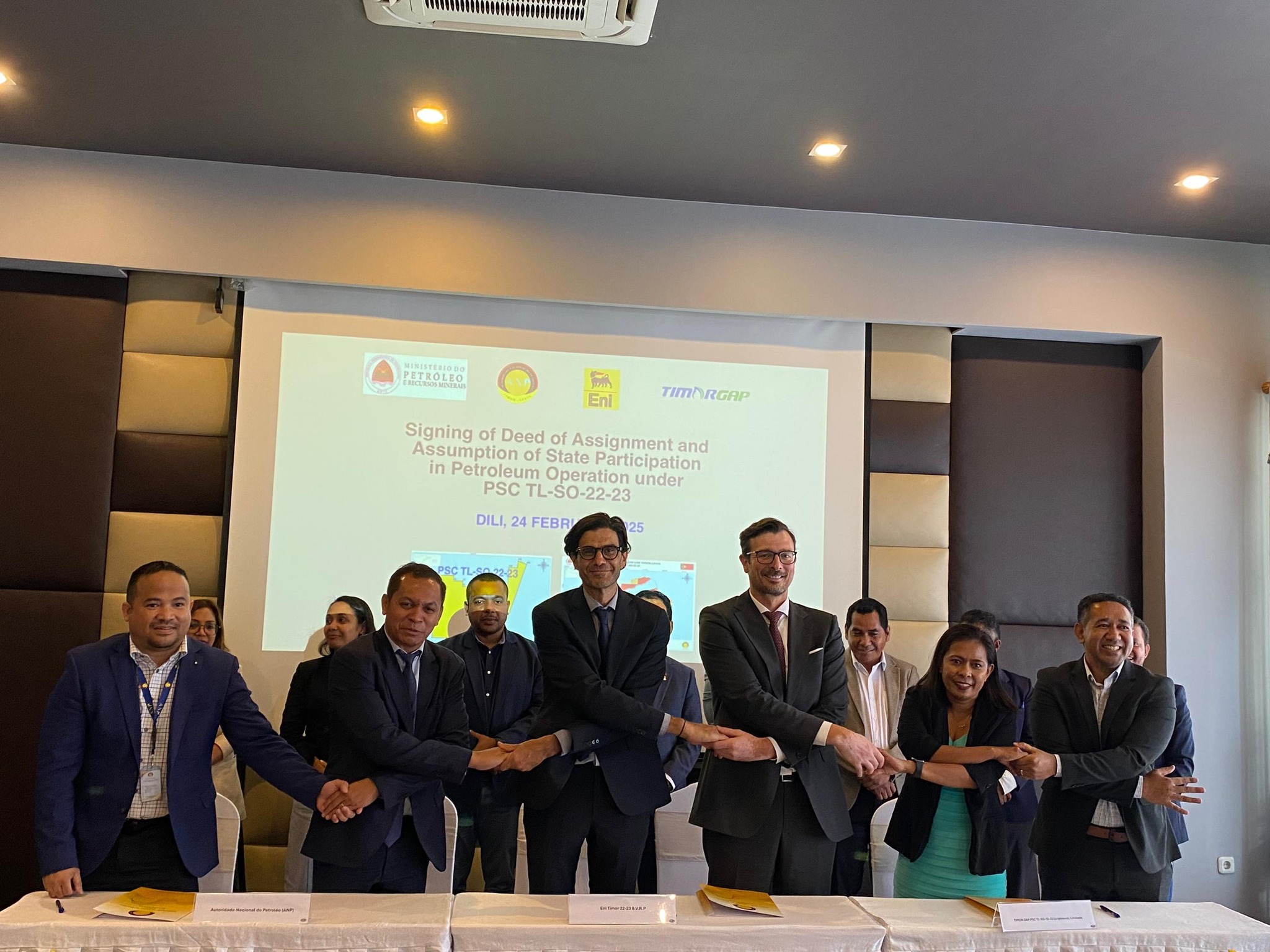
Timor-Leste has taken another decisive step in asserting state ownership over its natural resources, with TIMOR GAP, E.P. formally receiving a 12.5% participating interest in Production Sharing Contract PSC-TL-SO-22-23, more commonly known as Block P, through a newly signed agreement with Eni Timor 22-23 B.V.
The signing, witnessed by H.E. Francisco da Costa Monteiro, Minister of Petroleum and Mineral Resources, formalises the state's right of participation under Timor-Leste law and marks a significant milestone in the country's ongoing strategy to maximise national benefit from its offshore resources.
A Strategically Located Block
Block P sits on Timor-Leste's southern coast in a position of considerable strategic value, located between the Greater Sunrise gas fields to the north and the Chuditch gas field to the south. Its position places it at the intersection of two of the most closely watched energy developments in the Timor Sea, reinforcing its potential significance to the country's upstream portfolio.
The southern coast of Timor-Leste has long been identified as a priority zone for exploration, and Block P's location makes it a natural area of focus for both national and international operators. As activity in the Greater Sunrise and Chuditch projects continues to develop, Block P's proximity positions it as a complementary asset in what is becoming an increasingly active offshore corridor.
The original Production Sharing Contract was signed on December 14, 2023, following the block's release during the Second Timor-Leste Licensing Round. The latest agreement formalises TIMOR GAP's entry as a joint venture partner, with Eni and its newly established subsidiary actively pursuing an ongoing work programme that includes seismic surveys and drilling activities.
State Participation as National Policy
The agreement reflects a broader and consistent government mandate to ensure that Timor-Leste's natural wealth generates lasting value for its people. Minister Monteiro was unambiguous at the signing: "The Government has a clear policy to ensure maximum participation by the State company in the development of natural resources."
This philosophy has been a cornerstone of Timor-Leste's approach to resource governance since independence, and agreements like this one represent its practical application. Rather than remaining a passive recipient of royalties and taxes, Timor-Leste is actively positioning TIMOR GAP as a hands-on participant in upstream operations, building institutional capacity and technical expertise alongside revenue.
For TIMOR GAP, this agreement adds to a growing portfolio of upstream interests. The national company has been steadily expanding its footprint across Timor-Leste's offshore blocks, most recently receiving a 16% interest in the Bayu-Undan project from Santos, and holding a 56.56% majority stake in the Greater Sunrise Joint Venture. Block P represents another layer of that strategy.
Eni's Longstanding Commitment to Timor-Leste
Eni's presence in Timor-Leste is not a recent development. The Italian energy major has maintained a sustained commitment to the country's upstream sector, and that dedication was publicly recognised at the 5th Timor-Leste Energy, Mining & Business Forum 2025 in Dili, where Eni was awarded the Longstanding Partnership Award in front of over 400 delegates from more than 15 countries.
That recognition reflects not just years of technical engagement but a relationship built on institutional trust. In formalising TIMOR GAP's participation in Block P, Eni continues to demonstrate the kind of collaborative approach that has made it one of the more respected international operators in the country.
What Comes Next
With Block P now advancing through active seismic and drilling work, and state participation formally secured, attention turns to what the exploration programme will reveal. If results are encouraging, Block P could emerge as a meaningful addition to Timor-Leste's upstream pipeline at a critical moment for the country's energy future.
The shutdown of the Bayu-Undan field in 2025, which generated over $25 billion in revenue for Timor-Leste over its lifetime, has intensified the national focus on identifying and developing the next generation of producing assets. In that context, agreements like this one carry significant weight. They signal that Timor-Leste is not waiting, but actively building the partnerships and securing the stakes that will define its resource landscape for decades to come.


