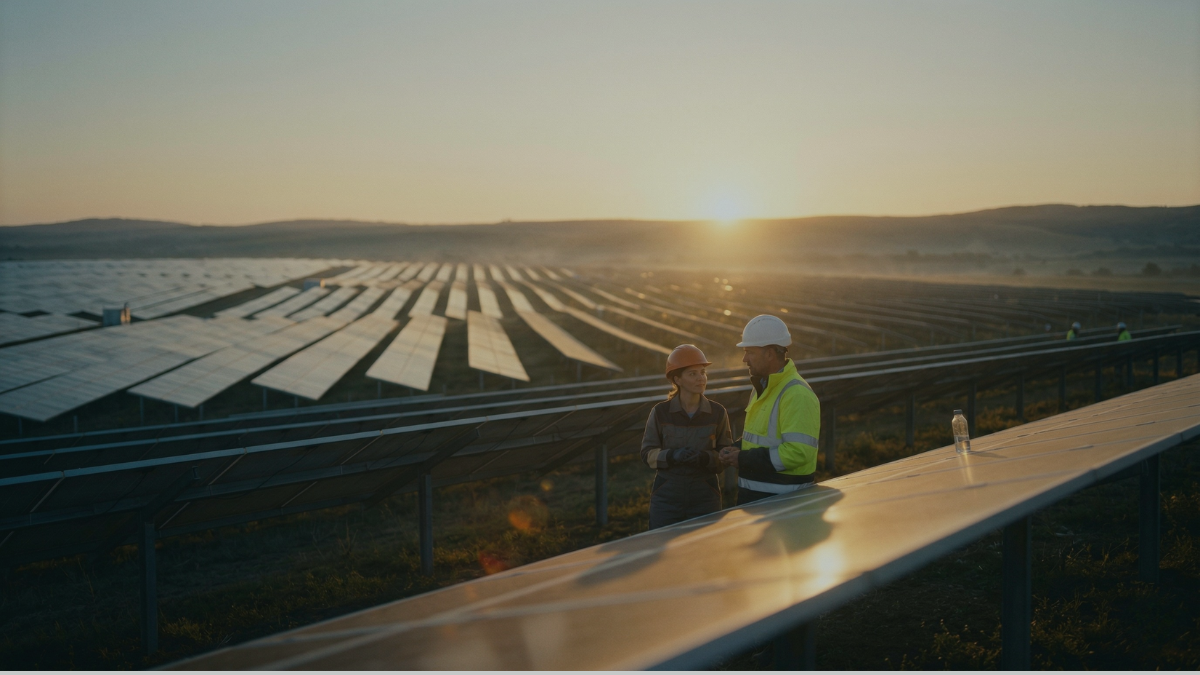
Romania is expanding the Dama Solar project to become the largest photovoltaic project in Europe, in a move that reflects a clear push toward increasing reliance on renewable energy.
Rezolv Energy is developing an advanced solar power project with a planned capacity of up to 1.3 GW, making it the largest of its kind currently planned in Europe. Updated documents show that the company has increased the proposed capacity by at least 200 MW.
The project will be connected to the grid with a capacity of 1.07 GW via a 400 kV transmission network, using an underground cable stretching between 3.5 and 3.6 kilometers. It will cover an area of 1,064 hectares across the communes of Pilu and Grăniceri in Arad County, near the Hungarian border.
The project has also attracted interest from the European Bank for Reconstruction and Development, which is considering providing financing. According to estimates, capacity could reach 1.24 GW, with a decision expected by May 28.
In parallel, Enery is developing a 761 MW solar project in Ogrezeni, west of Bucharest. The project includes a battery energy storage system (BESS) with a capacity of 534 MW and more than 1 GWh in planned storage, highlighting the accelerating pace of renewable energy investments in Romania.
Rezolv Energy plans to begin construction in mid-2026, with completion expected within approximately two and a half years, targeting early 2029. The project is being developed through its subsidiary, West Power Investments.
It has also secured contracts for difference (CfDs) for 520 MW in Romania’s renewable energy auction last year. The project will be developed in three phases, with around 500 workers expected to be involved during construction.
The project is expected to reduce carbon dioxide emissions by approximately 619,000 tons annually. Earlier plans also included a 500 MW battery energy storage system, according to statements from the mayor of Grăniceri.
The project represents a significant step forward for Europe’s renewable energy sector, supporting the transition toward cleaner energy sources while helping to reduce emissions. It also contributes to grid stability by combining large-scale generation with energy storage, improving reliability, particularly during peak demand periods.
On the economic side, it is expected to attract further investment in energy infrastructure and create jobs, strengthening Romania’s position as an emerging regional hub for clean energy in Eastern Europe.
Source: https://shorturl.at/0nuCn